
Overwhelmed Isn't the Same as Being Behind
What designers are actually afraid of, and what to do about it.

I keep having the same conversation.
A designer pulls me aside after a demo, or sends a message after a meeting. Some version of: “I’m not against AI. I just genuinely think my livelihood is at stake if I don’t adapt. And I don’t know where to start.”
That’s two different fears dressed as one. They need different answers.
The fear that’s worth taking seriously
The execution layer of design work is getting cheaper and faster every month. Generating layouts. Writing first-draft copy. Producing documentation. Creating variants. If that’s where most of your working hours go, the fear is pointing at something real.
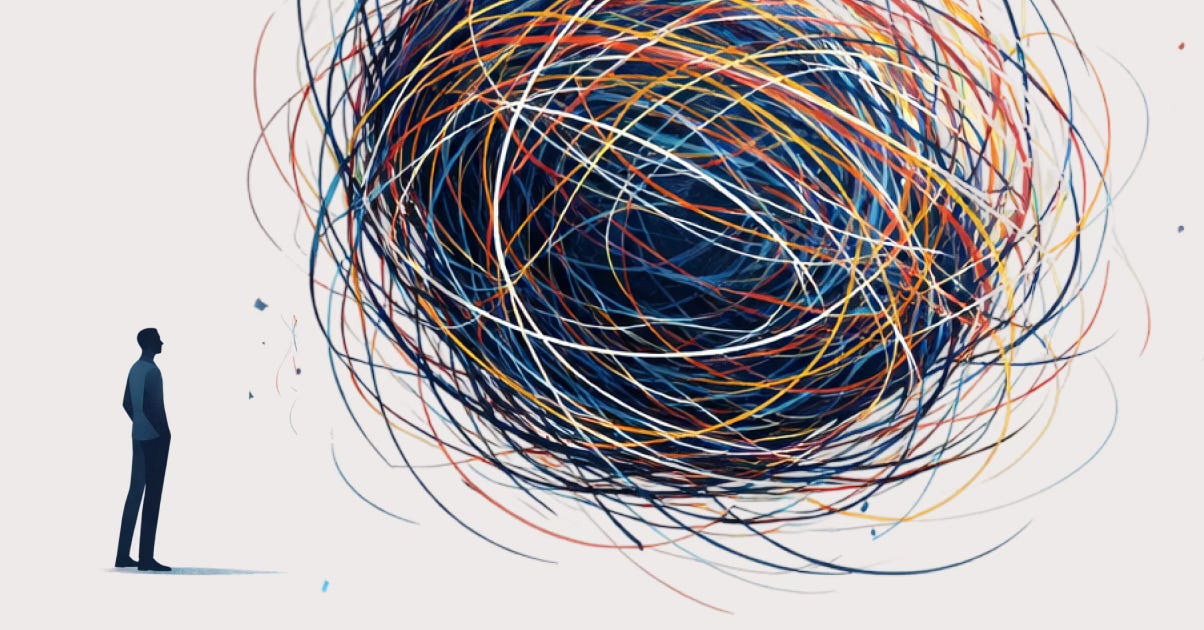
The other fear, that you can’t keep up with the release cycle, that a new tool drops before you’ve learned the last one, isn’t a signal about your skills. It’s noise. You cannot track every release. That’s not a personal failure.
You don’t have to be excited about AI
The designers finding their footing right now aren’t the ones who adopted everything fastest. They’re the ones who found one place where AI makes their current work sharper or more defensible, and went deep there. One specific result they can point to and repeat.
Not broad adoption. Specific utility.
You don’t need enthusiasm. You need one entry point that works. The operational fear loosens when you have a real result in your hands.
Your judgment is what AI can’t replace
AI can generate. It can execute well-defined tasks and produce volume at a speed no human matches. What it can’t do: know what right looks like for your product and your users. Hold the standard that lives in your head after years of craft. Catch the thing that’s technically correct but wrong for the context.
The designers struggling to articulate their value aren’t struggling because AI is too capable. They never had to articulate it before. Their output spoke for itself.
AI needs something different. It needs your judgment made explicit. The reasoning behind the calls you make so fast they feel like instinct. Your sense of where a pattern works and where it breaks. Getting that out of your head and into something a system can use isn’t a threat to your expertise. It’s what makes it durable.
The real risk isn’t fear
The designers who should be paying attention aren’t the ones who are afraid.
It’s the ones who’ve decided to wait it out. Not skeptical. Not cautious. Just disengaged.
Skepticism asks: what is this actually good for in my specific work? That’s the right question.
Disengagement assumes the work stays the same and the tools are optional. That assumption has a shelf life. It’s getting shorter.
The fear keeps you attentive. Use it to get clear on what you offer. Find one place to go deep. Stop tracking the release cycle.
Stop waiting for the landscape to settle. It won’t. Your judgment is the thing that stays.
I write about design systems, AI, and where the industry is actually heading. If this landed, follow me on LinkedIn. What’s your take? Drop it in the comments.